
Two hundred and fifty kilometres of concrete cross the dry Chaco of Santiago del Estero. The water flows, the walls are smooth, and whatever falls in finds no way back up.
The team surveyed the full length of the canal six times between October 2023 and February 2024. This is what they found.
A structure that works as a trap
The Canal de la Patria is an open-air, concrete-lined water canal running through the Dry Chaco ecoregion of Santiago del Estero. Its walls are smooth and sloping, and the water flows. An animal that comes down to drink, or tries to cross from one side of the forest to the other, falls in and finds no way back up: it dies of drowning or hypothermia.
There is a second, less visible effect. A water line of this length splits the forest in two. Populations on either side stop meeting, and over time that weighs as heavily as the drownings themselves.
The 207 records in the published study are a floor: they cover wild fauna only, the current carries the bodies away, and nobody walks 250 kilometres every day. Counting domestic animals as well, the team recorded more than 250.
Six full surveys of the canal between October 2023 and February 2024 —the first four a month apart, the last two only days apart— combined with interviews with local residents.
The giant anteater
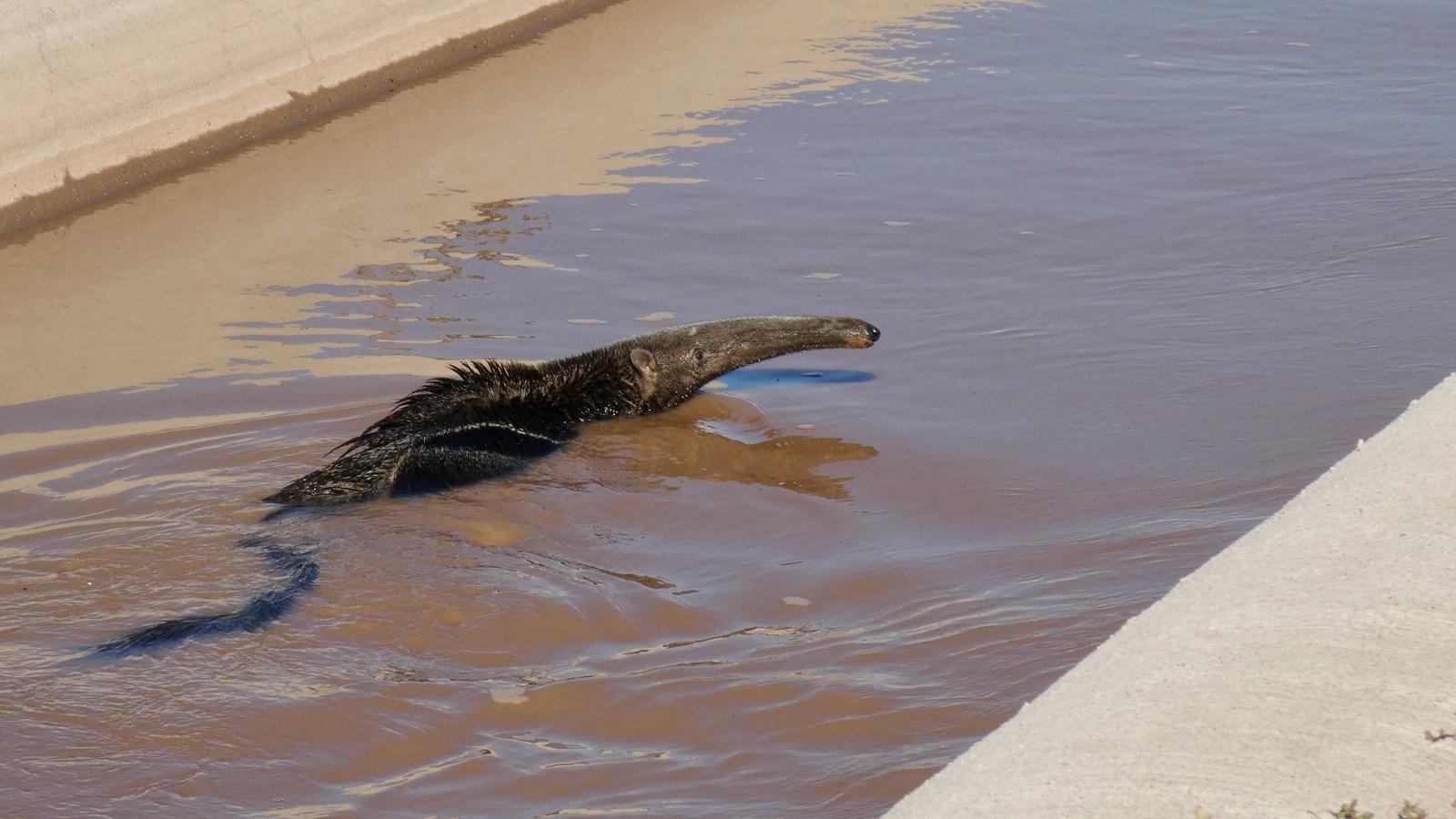
Of the 35 species recorded, six are of particular conservation concern, and the most affected was the giant anteater. It is a large, heavy animal with short legs: it enters the water easily and struggles to leave it.
When someone spots it in time, it can be saved. Local residents rescue the ones they manage to see. The problem is that the canal is two hundred and fifty kilometres long and almost nobody is watching.
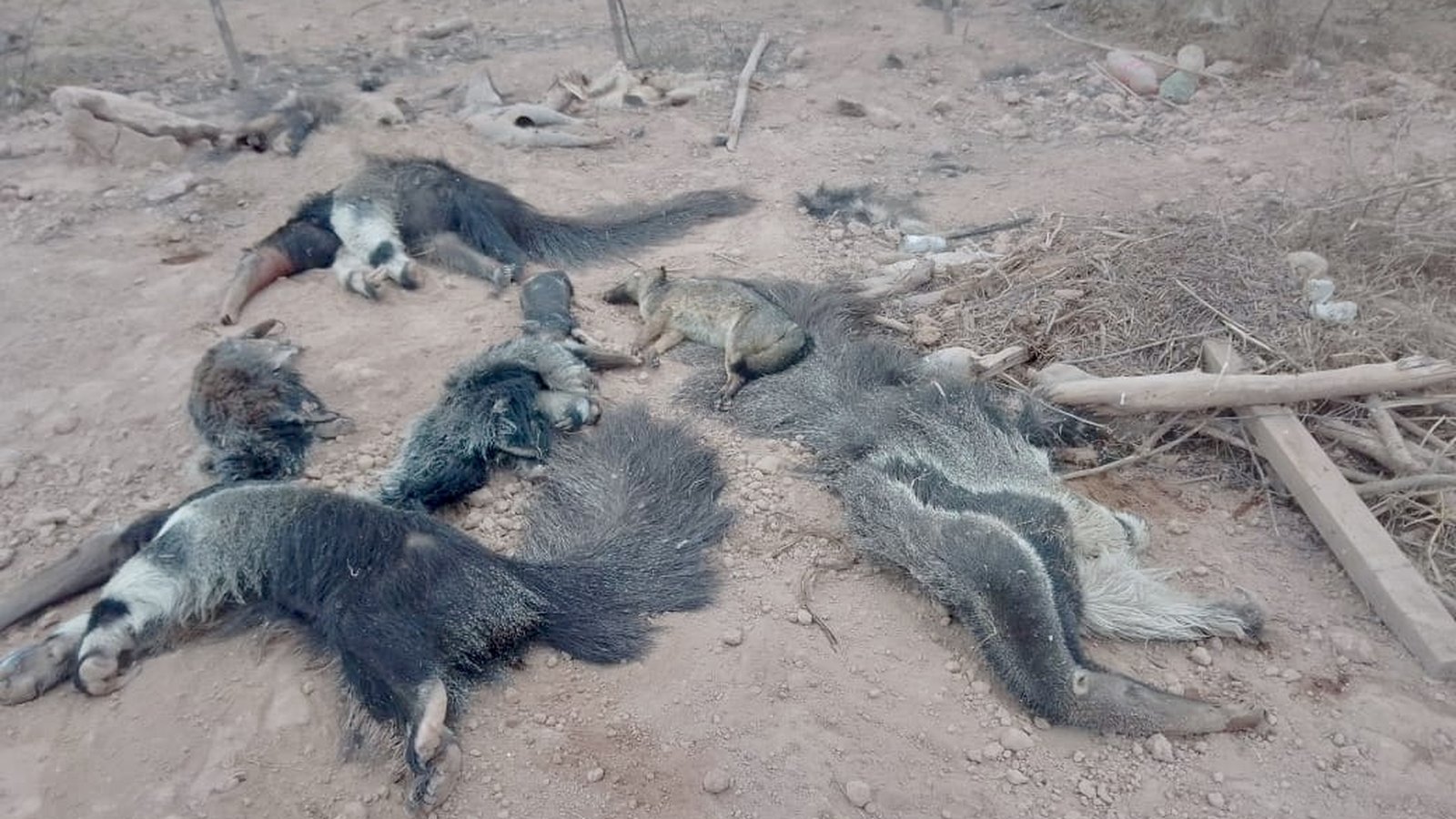
The most worrying part is that the deaths are falling
Across the six surveys, the number of drowned animals kept falling.
The problem is not easing: there are fewer and fewer animals left to fall in. It is the signature of large-scale defaunation.
There is a solution, and it is known
Covering the canal —so that it is no longer open from above— solves both problems at once: no animal falls into the water, and the forest is no longer cut in two.
It is the technical recommendation that follows from the survey, and the one the published study sets down. What has been installed so far, along two hundred and fifty kilometres, are scattered ladders and sluices: animals still cannot get out.
Where the case stands
The survey drew public attention and the matter stopped being a local issue. In December 2024 the National Ombudsman's Office issued Resolution 53/24, formally requiring the national and provincial governments to modify the structure as a matter of urgency and to commission an external, independent environmental assessment. It also found irregularities in the impact assessment procedure that authorised the works.
With no effective response, Aves Argentinas, Fundación Vida Silvestre Argentina and FARN filed an environmental damage claim before Argentina's Supreme Court against the National State and the province of Santiago del Estero.
The Attorney General's Office ruled that the case falls under the Court's original jurisdiction, given the joint responsibilities involved: the national government designed, funded and supervised the works, and the province operates and maintains them. The case is under review.
In the meantime, reports of drowned animals keep coming in.
The full study
Gallego-García, D. & Sarasola, J.H. (2024). Water canals may promote large-scale defaunation of the Gran Chaco. Biological Conservation 296:110714. See the publication
If you see an animal in the canal, tell us
Reports from people living nearby are currently the only way to know what is still happening along those two hundred and fifty kilometres. Every report helps rescue an animal that is still alive, and keeps the record going for those that were not reached in time.
SilentSong is our app for reporting it from a phone, in under two minutes. It works with no signal: the report is stored on the phone and sent as soon as the connection returns.