
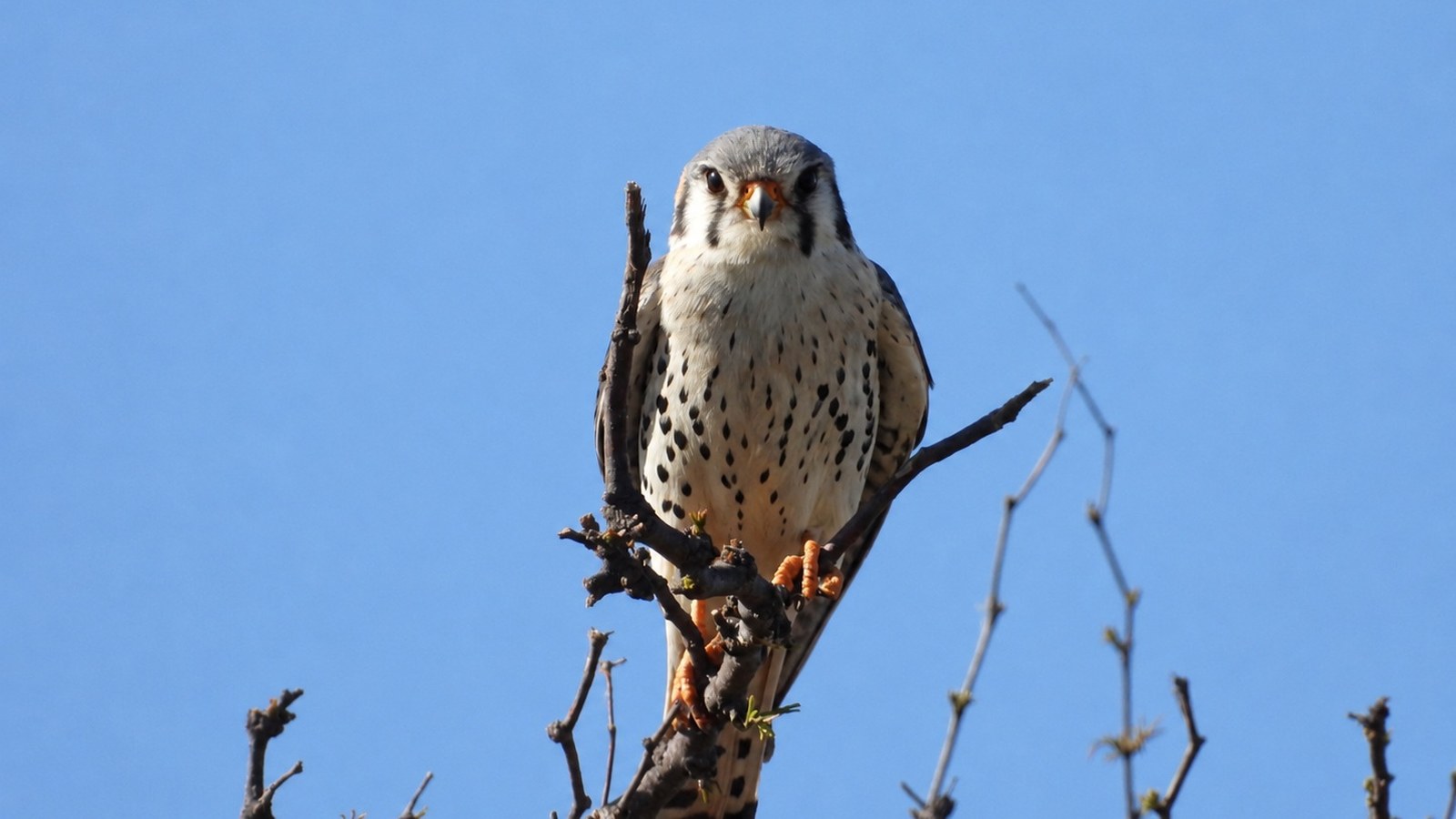
American Kestrels are breeding fifteen days earlier
Every season we follow their nests in different habitats across central Argentina.
A bird of prey of rural landscapes
The American Kestrel (Falco sparverius) is the smallest falcon in our landscapes. It is common in rural areas of central Argentina: you have probably seen one perched on a wire or a fence by the roadside.
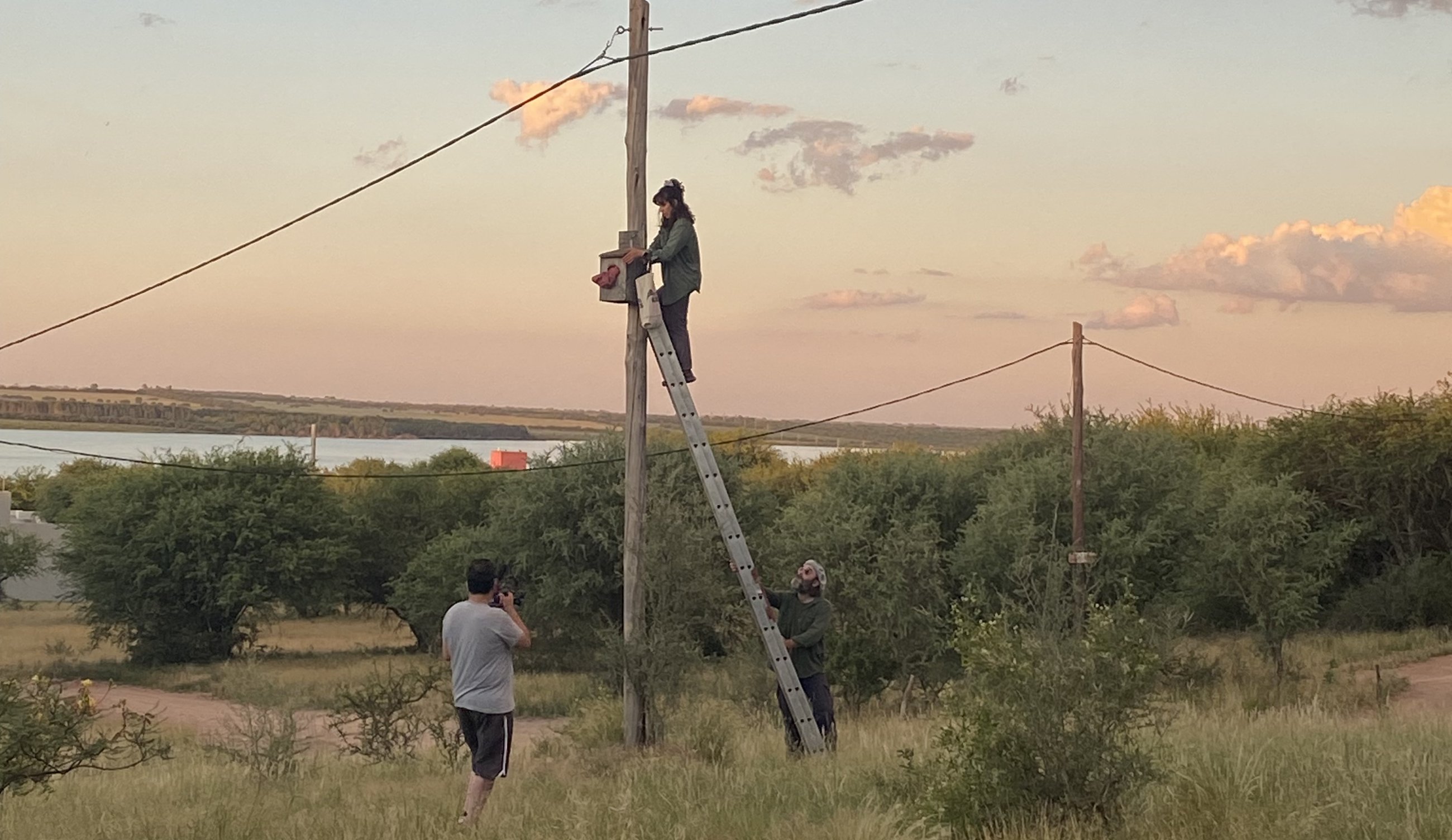
We have studied it since the centre began. It needs cavities to breed, which are increasingly scarce, so we install nest boxes in natural areas and on farmland.
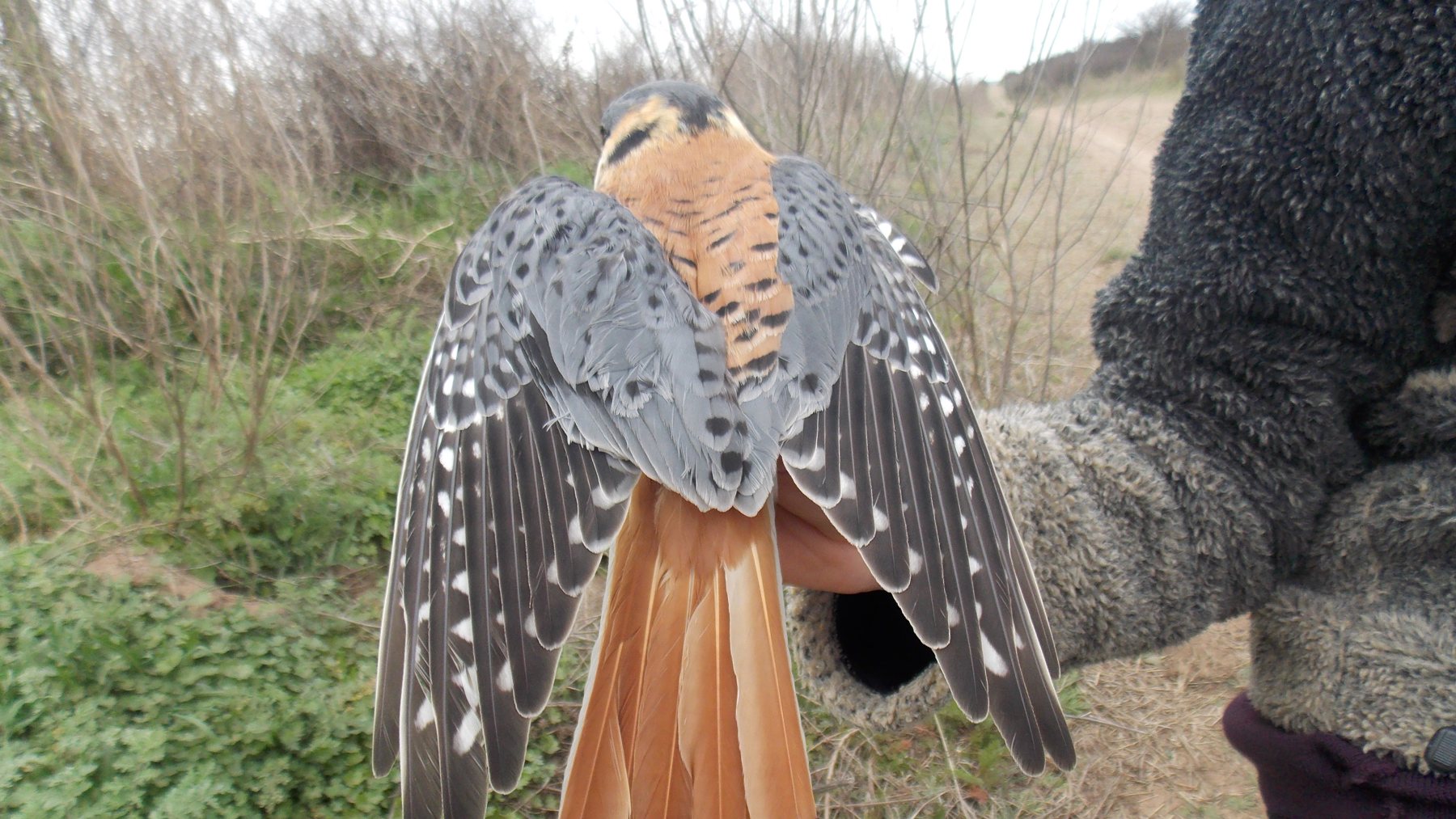
Every spring we count the eggs, measure and ring the chicks, and clean the boxes for the next season.
An earlier start linked to climate change
For ten years, Paula Orozco Valor has followed every nest in this project. Her data show that kestrels now start breeding about fifteen days earlier than when monitoring began.
We are now studying how temperature and prey availability affect the species' breeding calendar.
Agricultural intensification and rising temperatures
The project combines fieldwork with data on climate, available prey, breeding and the condition of each bird.
If you find a dead wild animal, let us know
Reporting with SilentSong takes two minutes on your phone and works without signal.
How it works